
Understanding the Flywheel Model in Digital Marketing
In today's dynamic digital landscape, traditional marketing funnels are becoming less effective. The flywheel model offers a more holistic and sustainable approach to attracting, engaging, and delighting customers. This post will explore the flywheel model, its components, and how it can be applied to your digital marketing strategy.
What is the Flywheel Model?
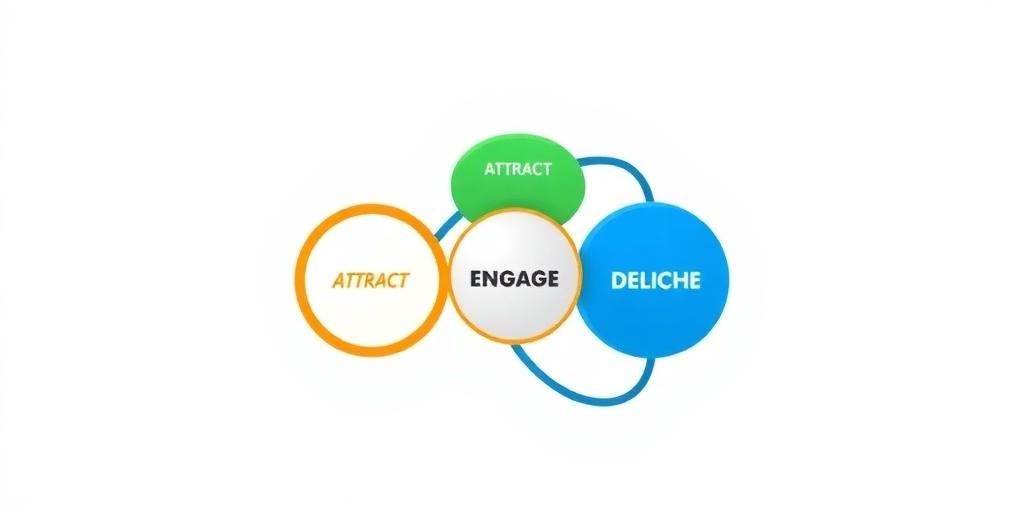
The flywheel model, popularized by HubSpot, visualizes the customer journey as a continuous cycle rather than a linear funnel. It emphasizes momentum and continuous improvement, where satisfied customers fuel growth by referring new customers and providing positive feedback.
Unlike the funnel, which ends once a customer is acquired, the flywheel focuses on retaining and delighting customers to keep the cycle spinning. The three main stages of the flywheel are:
- Attract: Draw in potential customers with valuable content and information.
- Engage: Interact with prospects and customers, providing insights and solutions.
- Delight: Ensure customers are satisfied with your product or service, turning them into advocates.
Key Components of the Flywheel
Attract Stage:
- Content Marketing: Create blog posts, ebooks, and videos that address your audience's pain points.
- SEO: Optimize your website and content to rank higher in search engine results.
- Social Media: Share valuable content and engage with your audience on social platforms.
Engage Stage:
- Email Marketing: Nurture leads and provide personalized content via email.
- Chatbots: Offer instant support and answer common questions.
- Marketing Automation: Automate repetitive tasks and personalize customer interactions.
Delight Stage:
- Customer Service: Provide excellent support and address customer issues promptly.
- Feedback Collection: Gather customer feedback to improve your products and services.
- Loyalty Programs: Reward loyal customers to encourage repeat business.
Applying the Flywheel Model to Your Digital Marketing Strategy
- Align Your Teams: Ensure that your marketing, sales, and customer service teams are aligned and working towards a common goal.
- Focus on Customer Satisfaction: Prioritize customer satisfaction and retention.
- Optimize for Momentum: Identify and remove friction points in the customer journey to keep the flywheel spinning.
- Measure and Analyze: Track key metrics to measure the effectiveness of your flywheel and identify areas for improvement.
Benefits of the Flywheel Model
- Sustainable Growth: The flywheel model promotes sustainable growth by focusing on customer retention and advocacy.
- Improved Customer Experience: By prioritizing customer satisfaction, the flywheel model enhances the overall customer experience.
- Increased Efficiency: By aligning teams and optimizing processes, the flywheel model improves efficiency and reduces wasted effort.
Conclusion
The flywheel model offers a powerful framework for digital marketing strategy. By focusing on attracting, engaging, and delighting customers, businesses can create a continuous cycle of growth and build long-term relationships.


