
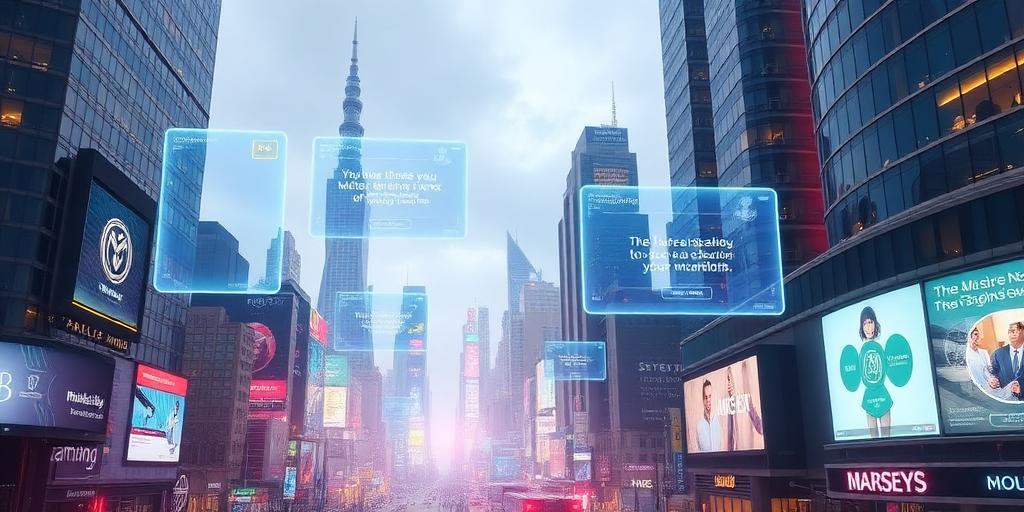
The Future of Paid Advertising: Trends 2025
The world of paid advertising is in constant flux, driven by technological advancements, evolving consumer behaviors, and shifts in platform algorithms. Looking ahead to 2025, several key trends are poised to reshape the landscape, demanding that marketers adapt to stay ahead of the curve.
1. AI-Powered Personalization
Artificial intelligence (AI) will continue to revolutionize paid advertising, enabling deeper personalization at scale. AI algorithms can analyze vast amounts of data to understand individual user preferences, predict their needs, and deliver highly relevant ads. This means moving beyond basic demographic targeting to create tailored experiences that resonate with each customer.
- Dynamic Creative Optimization (DCO): AI can automatically generate and test different ad variations (headlines, images, calls-to-action) to identify the most effective combinations for specific audiences.
- Predictive Bidding: AI algorithms can predict the likelihood of a conversion for each user and adjust bids in real-time to maximize ROI.
- Personalized Landing Pages: Directing users to landing pages that are tailored to their specific interests and needs, based on their interactions with the ad.
2. The Rise of Voice Search
With the increasing popularity of voice assistants like Siri, Alexa, and Google Assistant, voice search is becoming a significant channel for consumers to find information and make purchases. Paid advertising strategies need to adapt to this shift by optimizing for voice search queries.
- Long-Tail Keywords: Focus on long-tail keywords that reflect natural language and conversational queries.
- Local Search Optimization: Optimize for local search to capture users searching for nearby businesses and services using voice search.
- Featured Snippets: Aim to appear in featured snippets on search engine results pages (SERPs) to increase visibility in voice search results.
3. Immersive Experiences: AR and VR
Augmented reality (AR) and virtual reality (VR) are emerging as powerful tools for creating immersive and engaging advertising experiences. These technologies allow brands to showcase products in interactive and realistic ways, driving higher engagement and conversions.
- AR Product Try-Ons: Allowing customers to virtually try on clothes, makeup, or furniture using AR apps.
- VR Brand Experiences: Creating virtual environments where users can explore a brand's products and services in an interactive way.
- Interactive AR Ads: Developing ads that allow users to interact with the brand's products or services directly within the ad unit.
4. The Metaverse Opportunity
The metaverse, a persistent, shared virtual world, presents new opportunities for paid advertising. Brands can create virtual stores, sponsor events, and offer virtual products within metaverse environments.
- Virtual Land Ownership: Purchasing virtual land to create branded experiences and virtual stores.
- NFT Advertising: Using non-fungible tokens (NFTs) to create exclusive advertising campaigns and reward loyal customers.
- In-World Advertising: Placing ads within metaverse environments, such as billboards in virtual cities or product placement in virtual games.
5. Enhanced Data Privacy and Transparency
Consumers are increasingly concerned about data privacy, and regulations like GDPR and CCPA are forcing advertisers to be more transparent about how they collect and use data. In 2025, paid advertising will need to prioritize data privacy and transparency to maintain consumer trust.
- First-Party Data: Focus on collecting and utilizing first-party data (data collected directly from customers) to personalize advertising experiences.
- Privacy-Enhancing Technologies (PETs): Implementing PETs to protect user privacy while still enabling effective targeting and measurement.
- Transparency and Control: Providing users with clear and easy-to-understand information about how their data is being used and giving them control over their data preferences.
Conclusion
The future of paid advertising in 2025 will be shaped by AI, voice search, immersive experiences, the metaverse, and enhanced data privacy. By embracing these trends, marketers can create more engaging, personalized, and effective advertising campaigns that drive results while respecting consumer privacy.


